


Construction Tractor
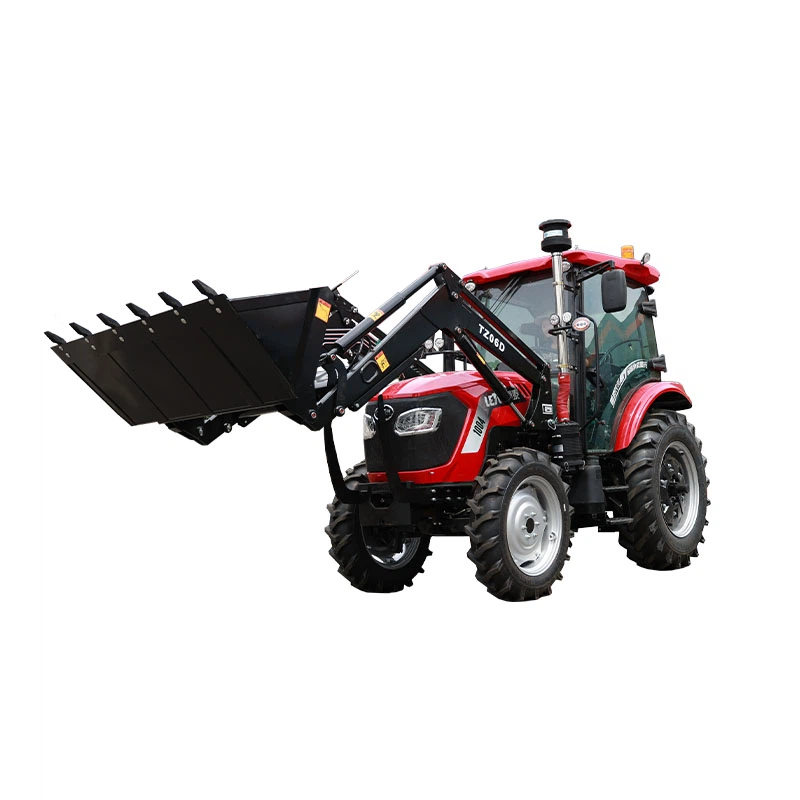
What is Construction Tractor
Heavy equipment, heavy machinery, earthmovers, construction vehicles, or construction equipment, refers to heavy-duty vehicles specially designed to execute construction tasks, most frequently involving earthwork operations or other large construction tasks.
Benefits of Construction Tractor
Convenience: Owning construction equipment gives you the convenience to use it whenever you need it.
Efficiency: Owning construction equipment can give your team extra time to work with the equipment and become familiar with using it. When they have a higher familiarity with the equipment, they can be more productive in completing projects.
Mastery: When you own construction equipment, you have total control over when and how it’s used. You also have control over the maintenance and upkeep of the equipment, so you can ensure it stays in top shape.
Professionalism: Clients will notice the professionalism of your business when you complete jobs correctly and on time. By owning your own construction equipment, your team can complete projects for clients with quality and efficiency. Additionally, when you own equipment, you can react to unexpected project changes without worrying about equipment availability.
Business assets: Owning pieces of construction equipment makes them business assets you can sell when you no longer need them. You can resell any piece of equipment you own as long as there is demand for it.


Why Choose Us
Commitment to quality
We're committed to quality and concrete actions. That means we always deliver solutions in a professional and practical way.
World-wide expertise
We know international markets and trends. Our expertise, experience and network cover all corners of the world.
Competitive Price
We have professional sourcing team and cost accounting team, stive to reduce cost and profit and provide you a good price.
One-stop Solution
With rich experience and one-to-one service,we can help you choose products and answer technical questions.
1.Price of the tractor
Compare prices and features to find the best value for your money. Prices may vary depending on the tractor’s size, engine power, and additional features such as 4WD, cabin, front-end loader, etc.
2.Quality of the Tractor
If you are buying a tractor for farming then it must do more than just solving your purpose. It should be able to assist you for years to come. From the chassis to the mechanical and electrical parts, everything that goes in and on a tractor must be top-notch. The build-quality of the tractor determines its longevity and endurance.
3.Power of the Engine
Horsepower helps determine the tractor’s ability to perform various tasks. Choose a tractor with enough horsepower to ensure that it can best handle the tasks you plan to use it for. Indo farm tractors are available in an HP range of 20 HP to 110 HP. Make sure that your new tractor comes with a robust engine.
4.Size of your Farm
The size of your farm will determine the right size and weight of the tractor you must buy. Consider the width, height, and weight of the tractor and the attachments that you are required to use. Indo Farm offers compact and heavy-duty tractors to meet the different needs of the farmers.
5.Transmission type
The transmission type of a tractor helps determine the speed, torque, and power of the tractor, which affects its overall performance and capabilities. It also determines the type of work the tractor is best suited for, and ensures ease of operation. Hence, choosing the right transmission is crucial for making the most out of the tractor.
6.Driver’s Comfort
Comfort is an important factor to consider when purchasing a tractor, as it can greatly impact your experience while operating the tractor. Look for a tractor with a comfortable seat, adjustable controls, and good visibility. Indo Farm tractors are specifically designed with operator comfort in mind.
7.The hydraulic system of a tractor
Before bringing a tractor home, do ensure that its hydraulic system is operating at its best. A tractor can move and operate because hydraulic fluid delivers energy through the hydraulic system. This will determine how your tractor will perform the turning and lifting jobs.
8.After Sales Service
Finally, the most important aspect is to consider the after sales service of the manufacturer. A reliable brand with a good tractor dealer support can provide peace of mind and ensure that you get all the necessary help whenever you need if you have any issues with your tractor.
Types of Construction Equipment
1. Excavator
Excavators are versatile machines used for digging, trenching, and excavation tasks. They also handle lifting, demolition, and material handling with various attachments. Excavators are one of the most used construction equipment due to their precision, adaptability, and ability to perform in confined spaces.
2. Wheel Loader
Wheel loaders are ideal for loading materials such as dirt, gravel, and debris onto trucks. They are commonly used in mining, construction, and agriculture operations. These machines are known for their high mobility, large bucket capacity, and efficient material handling.
3. Motor Grader
Motor graders are crucial for road construction and maintenance. These machines are used to level and grade flat surfaces to ensure smooth and safe roads. They offer precise levelling and grading that contribute to better road quality and safety.
4. Backhoe Loader
Backhoe loaders combine the functionalities of both a loader and an excavator, making them a versatile option for digging, lifting, and construction operations. These are multifunctional and suitable for a wide range of applications.
5. Skid-Steer Loader
Skid-steer loaders are known for their manoeuvrability in tight spaces. They excel in tasks like landscaping, material handling, and excavation. Their compact size, easy manoeuvrability, and ability to work with various attachments make them very adaptable.
6. Articulated Dump Truck
Articulated dump trucks are designed for heavy hauling operations in challenging terrains, such as projects on mining sites and construction sites. They offer excellent off-road performance, high capacity, and durability for efficient material transport.
7. Compact Roller
Compact rollers are used for soil and asphalt compaction, guaranteeing a solid foundation for follow-up constructions. They enhance the durability of surfaces to provide a superior foundation through efficient compaction of the surface materials.
8. Bulldozer
Bulldozers are heavy equipment used for earthmoving, grading, and site preparation operations. They excel in pushing, ripping, and clearing tasks. These are extremely powerful and robust and can handle challenging terrains and heavy-duty work.
9. Asphalt Paver
An asphalt paver is a crucial piece of equipment used for asphalt laying operations on roads, highways, and parking lots to ensure smooth surfaces. They offer precision in laying asphalt on plane surfaces, contributing to more reliable and durable roads.
10. Concrete Mixer Truck
Concrete mixer trucks mix and transport concrete to construction sites or wherever needed, maintaining the concrete's quality and consistency during transit. They ensure timely delivery of ready-mixed concrete, reducing construction time.
11. Crane
Cranes are essential for lifting and positioning heavy materials, equipment, and structures in construction projects. They provide the capability to lift heavy loads with precision and control, saving a substantial workforce.
12. Drill Rig
Drill rigs are used to dig holes in a wide range of surfaces, including rock and soil. They are vital for foundation work and geotechnical investigations. They offer the ability to drill deep and precise holes for various construction purposes.
Uses of Tractor
Mowing Heavy Brush
Tractors are one of the handiest and best technology for trimming to be done. Hence, to make the lawn of your residence or the field of a golf club look trimmed and neat you will be requiring a tractor that has a mower attachment. For such a job, you will not be needing tractors that are huge and bulgy! A medium-duty 5 to 6 feet wide tractor with a proper mower attachment is completely fine for such trimming and maintenance.
Land Clearing
If you are someone that loves the surrounding environment to be neat and clean as well as free of dirt and unnecessary trash, then having a tractor is as important as having a best friend. Moving hurdles like rocks, heavy brush, dead trees, and other dirt to keep the land clear for growing crops requires a tractor. Tractors can help in such cases, the only thing you need to do is to attach a good quality brush puller to the tractor. The tractor will then pull off the grass from the roots with its muscle power.
Shifting Extra Heavy Things
You definitely know that your two hands will not be able to carry and shift heavy logs from one place to another. You will be needing a tractor for such tasks. The front-end loader present in a tractor has been specially made for accomplishing tasks like pushing, lifting, and carrying brush and logs.
Cultivation and Farming
Grow and cultivate a variety of plants in a field by using plows, disks, seed drills, and cultivators that can be used along with tractors of every size. Grow your favorite trees in your farming field to devour delicious juicy fruits with the help of augur which makes planting an easy job.
Easy Livestock Management:
In this era of modernization, where innovations resulted in new methods to be practiced, livestock management has been made easy and manageable as well only because of tractors. When the weather turns out to be harsh, having a tractor at that moment seems like a lifesaver. You can feed your livestock easily by bringing their feeding material from outside into their shelter. Also, you can shift your livestock to their shelter in a jiffy.
Emergency Help During Natural Disasters
Roads getting blocked because of natural disasters like tornadoes or floods is a common issue that every country on this earth faces. In such a situation, transportation gets blocked because of the size of the wheels. Most of the transports cannot pass the roads because of having small wheels that get stuck in the mud, debris, and dirty water. For such situations, a tractor is great to help. Because of having large wheels, you are able to cross all the hurdles and reach people who are in need of emergency help. You can as well as supply food in great numbers as a tractor can take up that much load.
Landscaping
We all know how much crucial it has become for us to plant trees and as well make ponds to reduce some of the impacts of global warming. And if you are someone that wishes to contribute to the wellbeing of the planet then you will definitely need a tractor for helping yourself out. Using the front-end roller, you can do the job of lifting and as well as sculpting the ground, leveling off hills, direct drainage, and building small ponds using the blade. The rock roller of tractors helps in pushing rocks into the ground giving a hard, durable surface without the requirement of paving.
Construction Projects
You will never see any sort of construction project go on without involving a tractor. With an augur, you can drill holes in the fastest way compared to any other method that is known. Doesn’t matter for what sort of purpose you will be using a tractor. It can be for a pole barn or some other purpose that you need to accomplish. You will just need a backhoe for your construction work. And then you are completely ready to dig out foundations, electric lines, water lines, and other things that are related to this field such as moving sand and gravel.
You can furthermore equip your tractor with a fork and then do the job of lifting easily. We all know that moving sacks of cement, unloading building materials, lifting, and roofing is an essential part of construction work. You cannot surely imagine getting all these jobs done without the assistance of a tractor.
Provides Amazing Emergency Backup
Running saws, drills, lights, computers, and communication equipment can be done with the help of a tractor as well. How do you ask? Simply just connect a 110-inverter with the battery of your tractor and then your tractor is all set to serve you.
Clearing Road by Removing Snow
Roads getting blocked because of heavy snow being a hurdle is something that almost all cold countries face. For such occurrences, a tractor will be the handiest thing that you will find. The tractor’s front-end loader and blade can dig out and remove the snow from the path and then you can use your roads freely again!
Environment: Exposing a piece of machinery to extreme heat or cold, abrasive materials, irregular surfaces and other environmental difficulties will take its toll on the equipment. You can help minimize these effects with specific preventative actions, like winterizing, using appropriate tires and pressure and storing a machine indoors during periods of prolonged disuse. Still, a harsh environment can significantly diminish a piece of equipment’s expected lifespan. Tools used indoors, like electric forklifts, are likely to have a longer lifespan than its outdoor equivalent.
Maintenance: Appropriate maintenance will do wonders for the life of a piece of equipment. Keeping up-to-date with necessary tasks like filter and fluid changes, greasing parts and performing regular inspections and repairs can keep equipment working at its most efficient and alert you to any problems before they necessitate major work or expenses. Ensuring your operators are well-trained on daily and weekly maintenance tasks can help them keep a close eye on it. Well-performed maintenance is one of the most important factors in making a machine last its longest.
Operator error: One significant reason for shorter equipment lifetimes is simple operator error. Just like you can drive a car in ways that aren’t healthy for it, operators can run heavy machinery in ways that damage it or put extra wear on components. They may move it in ways that put extra strain on the motor or brakes or consume more fuel than necessary. Provide training to help operators balance power and efficiency to extend the life of your equipment. Some machinery also has technology designed to give you reports on usage and how exactly it is being operated. These reports can help you address issues in operation and keep things running smoothly.
Our Factory
Currently, the company boasts a casting production line, a complete and efficient CNC machining line, whole machine assembly line, electrophoretic painting line, and a full set of component and whole machine testing equipment. The current annual production capacity reaches 8,000 units, with a new factory area capable of producing 30,000 units annually under construction and expected to be operational by 2024.


Certifications


FAQ
We're professional construction tractor manufacturers in China, specialized in providing high quality machinery with low price. We warmly welcome you to buy discount construction tractor made in China here from our factory.
construction tractor for compacting, 100 horse power front loader tractor power up your productivity, construction tractor for demolition machines