


Hey there! As a supplier of construction tractors, I often get asked about how these powerful machines work, especially their engines. So, I thought I'd take a deep dive into the inner workings of a construction tractor's engine and share some insights with you.
First off, let's talk about the basics. A construction tractor's engine is the heart of the machine, providing the power needed to perform all sorts of tasks on the job site. Whether it's digging, lifting, or hauling, the engine is what makes it all possible.
Most construction tractors use diesel engines, and there's a good reason for that. Diesel engines are known for their durability, efficiency, and torque. Torque is the rotational force that allows the tractor to move heavy loads, and diesel engines typically have more of it than gasoline engines. Plus, diesel fuel is more energy-dense than gasoline, which means you can get more work done with less fuel.

So, how does a diesel engine work? Well, it all starts with the intake stroke. During this stroke, the piston moves downward, creating a vacuum in the cylinder. The intake valve opens, allowing a mixture of air and fuel to enter the cylinder. In a diesel engine, the fuel is injected directly into the cylinder at the end of the compression stroke.
Next comes the compression stroke. The piston moves upward, compressing the air-fuel mixture in the cylinder. Diesel engines have a much higher compression ratio than gasoline engines, which means the air-fuel mixture is compressed to a much smaller volume. This high compression creates a lot of heat, which is important for the next step.
Once the air-fuel mixture is compressed, it's time for the power stroke. The fuel injector sprays a fine mist of diesel fuel into the hot, compressed air. The heat causes the fuel to ignite spontaneously, without the need for a spark plug like in a gasoline engine. This ignition creates a rapid expansion of gases, which pushes the piston downward with a lot of force. This force is transferred to the crankshaft, which converts the linear motion of the piston into rotational motion.
Finally, we have the exhaust stroke. The piston moves upward again, pushing the exhaust gases out of the cylinder through the exhaust valve. The exhaust gases are then released into the atmosphere through the exhaust system.
Now, let's talk about some of the key components of a construction tractor's engine. One of the most important components is the fuel injection system. The fuel injection system is responsible for delivering the right amount of fuel to the engine at the right time. It consists of a fuel pump, injectors, and a control unit. The fuel pump pressurizes the fuel, and the injectors spray it into the cylinders. The control unit monitors various engine parameters, such as engine speed and load, and adjusts the fuel injection accordingly.
Another important component is the air intake system. The air intake system is responsible for delivering clean, fresh air to the engine. It consists of an air filter, intake manifold, and throttle body. The air filter removes dirt, dust, and other contaminants from the air, while the intake manifold distributes the air evenly to the cylinders. The throttle body controls the amount of air that enters the engine, which in turn affects the engine's power output.
The cooling system is also crucial for the proper functioning of the engine. The cooling system is responsible for removing heat from the engine and keeping it at a safe operating temperature. It consists of a radiator, water pump, thermostat, and coolant. The water pump circulates the coolant through the engine and the radiator, where the heat is transferred to the air. The thermostat regulates the flow of coolant, ensuring that the engine stays at the right temperature.
The lubrication system is another important component. The lubrication system is responsible for reducing friction between the moving parts of the engine and preventing wear and tear. It consists of an oil pump, oil filter, and oil pan. The oil pump circulates the oil through the engine, and the oil filter removes any contaminants from the oil. The oil pan stores the oil when it's not in use.
Now that you have a better understanding of how a construction tractor's engine works, let's talk about some of the different types of construction tractors we offer. We have a wide range of tractors to suit different needs and budgets.
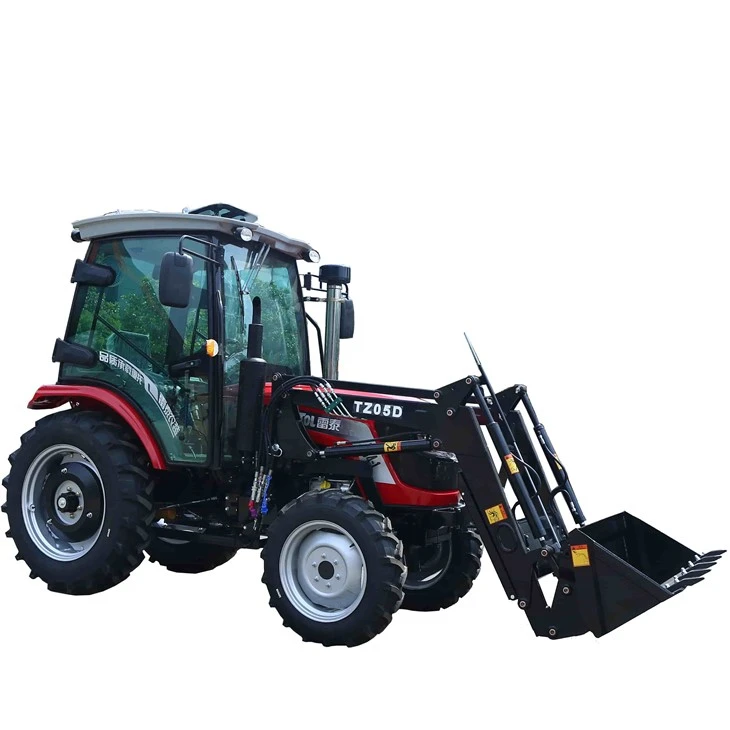
One of our popular models is the 120HP Tractor Front Loader Tractor. This tractor is powered by a 120-horsepower diesel engine, which provides plenty of power for heavy-duty tasks. It comes with a front loader, which makes it perfect for loading and unloading materials.
Another great option is the 90HP 4WD Backhoe Loader Farm Tractor with Loader Bucket. This tractor has a 90-horsepower diesel engine and four-wheel drive, which gives it excellent traction and maneuverability. It also comes with a backhoe and a loader bucket, making it a versatile machine for a variety of tasks.
If you're looking for a smaller, more affordable tractor, we also have the 504 Front Loader Tractor 50HP Tractor. This tractor is powered by a 50-horsepower diesel engine and is perfect for light-duty tasks around the farm or construction site. It comes with a front loader, which makes it easy to move materials.
So, there you have it! A brief overview of how a construction tractor's engine works and some of the different types of tractors we offer. If you're in the market for a construction tractor, we'd love to help you find the right one for your needs. Just reach out to us, and we'll be happy to answer any questions you may have and discuss your options. Let's get you the perfect construction tractor for your next project!
References
- Automotive Technology: A Systems Approach, 6th Edition by James D. Halderman
- Diesel Engine Theory and Operation by Robert N. Brady