


When it comes to modern agriculture, tractors play a pivotal role in enhancing productivity and efficiency. As a supplier of 120hp tractors with 4WD and 4 - row planting tools, I am often asked about the exhaust emissions of such equipment. In this blog post, I will delve into the details of the exhaust emissions of these tractors, their impact on the environment, and how we are addressing the concerns related to emissions.
Understanding the Basics of Exhaust Emissions
Exhaust emissions from tractors are a combination of various gases and particulate matter released during the combustion process in the engine. The main components of tractor exhaust emissions include carbon monoxide (CO), hydrocarbons (HC), nitrogen oxides (NOx), and particulate matter (PM). Each of these pollutants has different environmental and health impacts.
Carbon monoxide is a colorless and odorless gas that is produced when fuel is not completely burned. It can reduce the oxygen - carrying capacity of the blood, leading to headaches, dizziness, and in severe cases, even death. Hydrocarbons are unburned fuel components that can contribute to the formation of ground - level ozone, a major component of smog. Ozone can cause respiratory problems, especially for children, the elderly, and those with pre - existing respiratory conditions.
Nitrogen oxides are formed when nitrogen and oxygen in the air react at high temperatures during combustion. They are major contributors to acid rain, smog, and the formation of fine particulate matter. Particulate matter consists of tiny solid or liquid particles suspended in the air. These particles can penetrate deep into the lungs and cause respiratory and cardiovascular diseases.
Exhaust Emissions of a 120hp Tractor with 4WD and 4 - Row Planting Tool
The exhaust emissions of a 120hp tractor with 4WD and a 4 - row planting tool depend on several factors, including the engine design, fuel quality, operating conditions, and maintenance. Modern tractors are equipped with advanced engine technologies to reduce emissions. For example, many engines use direct injection systems, turbocharging, and exhaust gas recirculation (EGR) to improve combustion efficiency and reduce the formation of pollutants.
Direct injection systems deliver fuel directly into the combustion chamber, allowing for more precise control of the fuel - air mixture. This results in more complete combustion and lower emissions of CO and HC. Turbocharging increases the amount of air entering the engine, which also improves combustion efficiency and power output. Exhaust gas recirculation involves redirecting a portion of the exhaust gas back into the engine's intake manifold. This reduces the peak combustion temperature, which in turn reduces the formation of NOx.
However, despite these technologies, tractors still emit a significant amount of pollutants. The exact emissions levels can vary depending on the specific model and manufacturer. On average, a 120hp tractor may emit around 2 - 5 grams of CO per kilowatt - hour, 0.5 - 2 grams of HC per kilowatt - hour, 5 - 10 grams of NOx per kilowatt - hour, and 0.1 - 0.5 grams of PM per kilowatt - hour. These emissions levels are subject to change based on the engine's age, maintenance history, and operating conditions.
Impact on the Environment
The exhaust emissions from tractors can have a significant impact on the environment. As mentioned earlier, NOx and HC contribute to the formation of smog, which can reduce visibility and harm human health. Acid rain, caused by NOx and sulfur dioxide emissions, can damage forests, lakes, and soil quality. Particulate matter can also have a negative impact on air quality, especially in rural areas where tractors are commonly used.
In addition to these local and regional impacts, tractor emissions also contribute to global climate change. Carbon dioxide (CO2), although not a traditional pollutant in the same sense as CO, HC, NOx, and PM, is a greenhouse gas that traps heat in the Earth's atmosphere. The combustion of diesel fuel in tractors releases CO2, which adds to the overall concentration of greenhouse gases in the atmosphere.
Our Efforts to Reduce Emissions
As a supplier of 120hp tractors with 4WD and 4 - row planting tools, we are committed to reducing the environmental impact of our products. We work closely with engine manufacturers to ensure that our tractors are equipped with the latest emission - reducing technologies. For example, we offer tractors with selective catalytic reduction (SCR) systems, which can significantly reduce NOx emissions.
SCR systems use a urea - based solution called Diesel Exhaust Fluid (DEF) to convert NOx into nitrogen and water vapor. This technology can reduce NOx emissions by up to 90%. We also encourage our customers to use high - quality fuel and to follow proper maintenance schedules. Regular maintenance, such as changing air filters, fuel filters, and oil, can improve engine performance and reduce emissions.
Comparing with Other Agricultural Equipment
When comparing the exhaust emissions of our 120hp tractors with other agricultural equipment, it's important to consider the power and functionality of each machine. For example, a 70HP 4WD Backhoe Loader Farm Tractor with Loader Bucket and Excavator Bucket has a lower horsepower and may have different emission characteristics. However, the overall emission levels also depend on the specific engine and usage patterns.

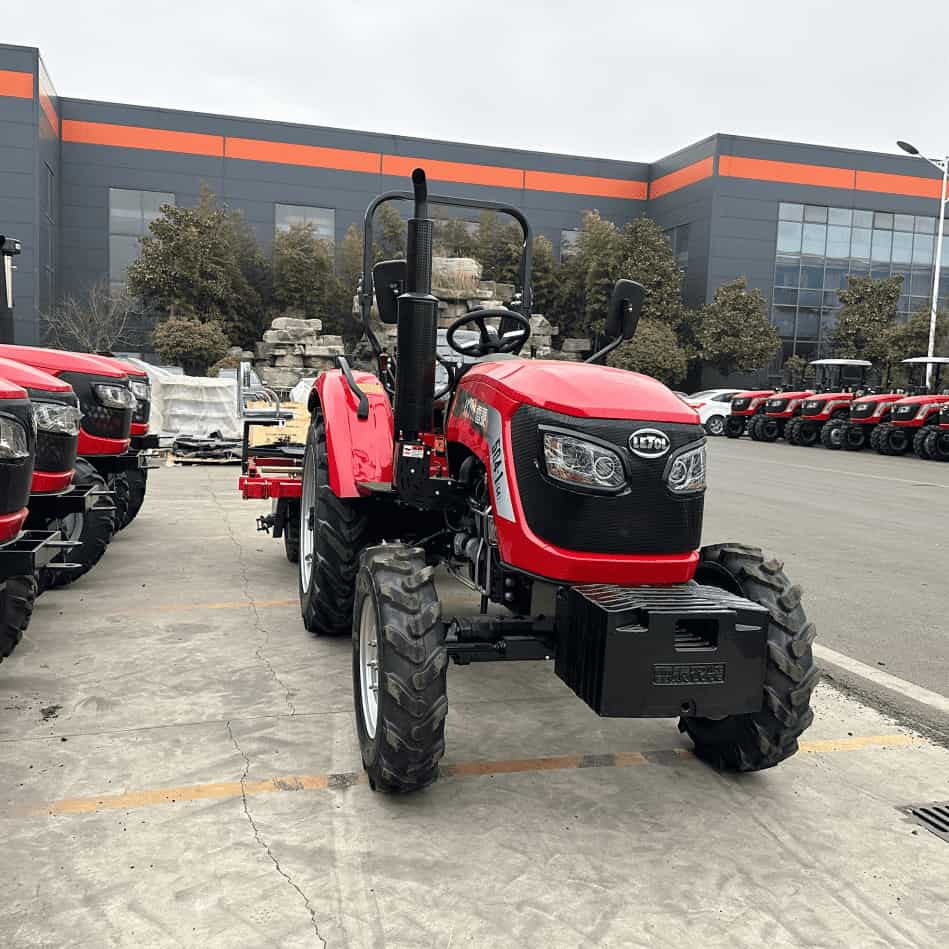
Similarly, a 504 Agricultural Tractor With Seedling Transplanter is designed for different tasks and may have a different emission profile. Our 4WD Tractor, 120HP, 4 - Row Plant/Fertilizer is optimized for planting and fertilizing operations, and its emissions are managed through advanced engine technologies.
The Future of Tractor Emissions
The future of tractor emissions is likely to be shaped by stricter environmental regulations and technological advancements. Governments around the world are implementing more stringent emission standards for agricultural equipment. For example, the European Union and the United States have set limits on the amount of pollutants that tractors can emit.
In response to these regulations, engine manufacturers are developing new technologies to further reduce emissions. These technologies include advanced combustion systems, hybrid and electric powertrains, and more efficient exhaust after - treatment systems. As a supplier, we are closely monitoring these developments and are committed to offering our customers tractors that meet or exceed the latest emission standards.
Contact Us for More Information
If you are interested in our 120hp tractors with 4WD and 4 - row planting tools, or if you have any questions about exhaust emissions, please feel free to contact us. We are happy to provide you with detailed information about our products, their emission characteristics, and how they can benefit your agricultural operations. Whether you are a small - scale farmer or a large - scale agricultural enterprise, we have the right solutions for you.
References
- [1] Diesel Technology Forum. (2023). Understanding Diesel Emissions.
- [2] Environmental Protection Agency. (2023). Agricultural Equipment Emission Standards.
- [3] SAE International. (2023). Tractor Engine Emission Testing and Standards.