


Hey there! As a supplier of 4wd 240hp heavy construction tractors, I often get asked about how these beasts steer. It's a pretty interesting topic, so I thought I'd break it down for you in this blog post.
First off, let's talk about why steering is such a big deal for a heavy - duty construction tractor. These tractors aren't like your average passenger cars. They're massive, with a lot of weight to move around, and they need to be able to maneuver precisely on construction sites. Whether it's making tight turns around obstacles or lining up for a specific task, a good steering mechanism is crucial.
Types of Steering Mechanisms in 4WD 240HP Heavy Construction Tractors
There are a few different types of steering mechanisms commonly used in these tractors, and each has its own pros and cons.
Hydraulic Steering
Hydraulic steering is one of the most popular choices for 4wd 240hp heavy construction tractors. It works by using hydraulic fluid to transfer force from the steering wheel to the wheels. When you turn the steering wheel, it activates a hydraulic pump. This pump then pressurizes the hydraulic fluid, which is sent through hoses to a hydraulic cylinder. The cylinder then moves a linkage that turns the wheels.
The main advantage of hydraulic steering is its power. It can easily handle the large loads and forces associated with heavy construction tractors. It also provides a smooth and responsive steering feel. You can turn the wheels with relative ease, even when the tractor is under a heavy load.
However, hydraulic steering systems can be a bit complex and expensive to maintain. The hydraulic fluid needs to be changed regularly, and any leaks in the system can cause problems. But overall, it's a reliable and effective way to steer these big machines.
Hydrostatic Steering
Hydrostatic steering is another option. It's similar to hydraulic steering in that it uses fluid to transfer force, but the way it operates is a bit different. In a hydrostatic steering system, the steering wheel controls a variable - displacement pump. This pump sends pressurized fluid to a hydraulic motor, which then turns the wheels.
One of the benefits of hydrostatic steering is its ability to provide infinite steering ratios. This means you can have very precise control over the steering, which is great for tasks that require fine - tuned maneuvering. It also doesn't have the same kind of mechanical linkages as some other systems, which can reduce wear and tear.
On the downside, hydrostatic steering systems can be more energy - consuming. The pump has to work constantly to maintain pressure, which can put a strain on the tractor's engine and reduce fuel efficiency.
Electric Power Steering
In recent years, electric power steering (EPS) has started to make its way into heavy construction tractors. EPS uses an electric motor to assist with steering instead of hydraulic fluid. When you turn the steering wheel, a sensor detects the movement and sends a signal to the electric motor. The motor then provides the necessary force to turn the wheels.
The big advantage of EPS is its simplicity. There are no hydraulic hoses or pumps to worry about, which means less maintenance. It's also more energy - efficient than hydraulic or hydrostatic systems because the motor only uses power when you're actually steering.
However, EPS may not be as powerful as hydraulic or hydrostatic steering in some cases. For really heavy - duty applications, it might struggle to provide enough force to turn the wheels easily.
How the 4WD System Affects Steering
Now, let's talk about how the 4wd system in these tractors interacts with the steering mechanism. In a 4wd tractor, all four wheels are powered, which gives it better traction and stability. But it also adds some complexity to the steering.
When you turn the wheels in a 4wd tractor, the front and rear wheels need to follow different paths. The front wheels have to turn at a different angle than the rear wheels to make a smooth turn. This is where the steering system has to work in harmony with the 4wd system.
The steering system has to be able to adjust the turning angle of the wheels based on the speed and direction of the tractor. If the steering isn't properly coordinated with the 4wd system, you can end up with uneven tire wear, reduced traction, and even difficulty in steering.

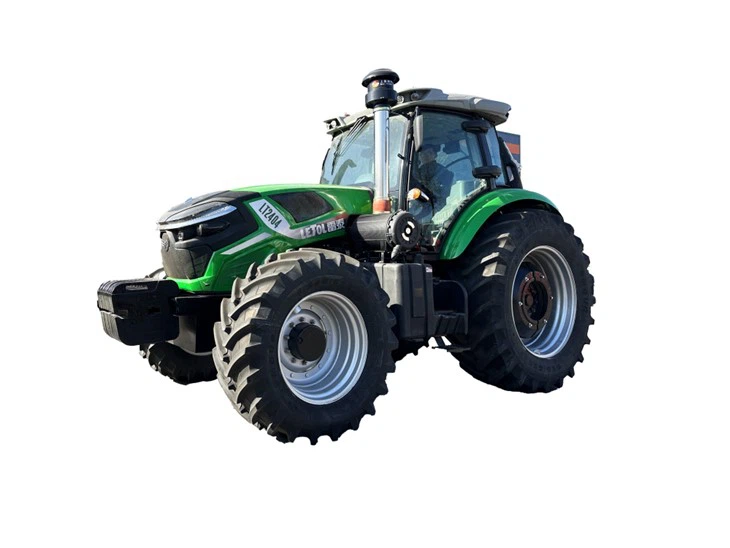
Our Tractors and Their Steering Mechanisms
At our company, we offer a range of 4wd 240hp heavy construction tractors with different steering mechanisms to suit your needs. Whether you prefer the power of hydraulic steering, the precision of hydrostatic steering, or the simplicity of electric power steering, we've got you covered.
Check out our 240HP 4WD Multipurpose Construction Tractor, which features a state - of - the - art hydraulic steering system. It provides excellent control and power, making it perfect for a variety of construction tasks.
If you're looking for a tractor with more precise steering for fine - tuned work, our 4WD 240HP Tractor for Farm & Construction with hydrostatic steering might be the right choice for you.
And for those who want a more energy - efficient and low - maintenance option, our 240HP 4WD Farm & Construction Tractor with electric power steering is a great alternative.
Why Choose Our Tractors?
We take pride in the quality and performance of our tractors. Our steering mechanisms are designed and tested to ensure they can handle the toughest construction jobs. We use high - quality materials and the latest technology to make sure our tractors are reliable and easy to operate.
In addition, we offer excellent customer support. If you have any questions about the steering mechanism or any other aspect of our tractors, our team of experts is always ready to help.
Contact Us for Purchase and Negotiation
If you're in the market for a 4wd 240hp heavy construction tractor, we'd love to hear from you. Whether you're a small construction company or a large contractor, we can provide you with the right tractor for your needs. Contact us today to start the purchase negotiation process. We're confident that we can offer you a great deal on a high - quality tractor with a top - notch steering mechanism.
References
- "Heavy Equipment Handbook" by Frank H. Rockwell
- "Construction Equipment Technology" by George W. Schexnayder
This blog post should give you a good understanding of the steering mechanisms in 4wd 240hp heavy construction tractors. If you have any more questions, feel free to leave a comment below.